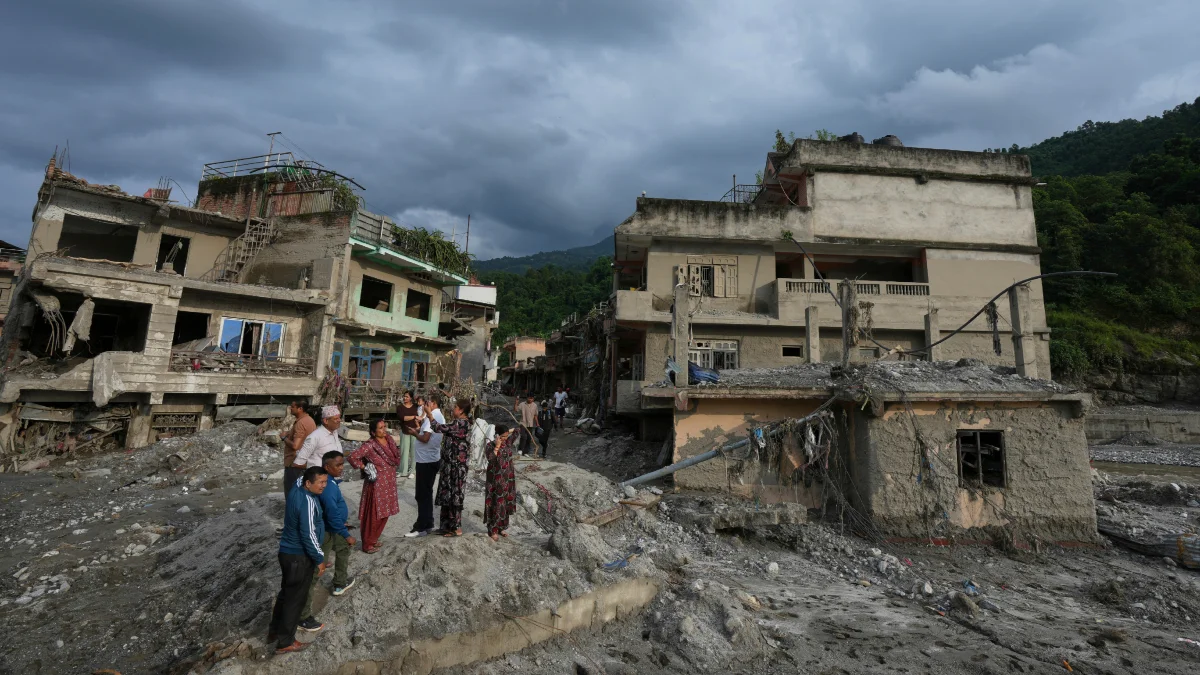
Nepal flash flood deaths rise to 616, over 2,500 still missing; India sends 11-member team to assist on rescue
Devastating flash floods in Nepal’s Rasuwa district and other parts of the central region have killed at least 616 people, Nepali police said on Saturday, three days after the disaster. Chinese state media has separately reported seven deaths, taking the combined death toll to at least 623, while nearly 2,000 people remain missing.
As rescue and relief operations intensify, an 11-member Indian team arrived in Nepal on Saturday to assist local authorities. Sent at the request of the Nepalese government, the team includes medical personnel and tunnel rescue experts and will support operations in the worst-affected areas.
The team will assist operations in areas severely affected by the flash floods, where authorities are carrying out large-scale rescue and relief efforts.
Trail of destruction across central Nepal, search on for over 2,500 missing
The floods swept through Rasuwa and other parts of central Nepal on Wednesday, killing more than 600 people and causing extensive damage to homes, roads, bridges and hydropower infrastructure.
Nearly 2,500 people have also been reported missing in Nepal and in Tibet, the origin of the calamity. Rescue teams are continuing to search affected areas amid challenging terrain and difficult weather conditions.
Nepal agrees to take foreign help
The Himalayan country on Saturday agreed to allow foreign assistance for search and rescue operations, reversing its earlier decision amid mounting pressure from countries whose citizens remain missing.
“We received massive pressure from the international community to allow at least search-and-rescue teams and some experts because their citizens have also gone missing in the floods,” The Kathmandu Post quoted a senior government official as saying. The official added that Nepal would allow a limited number of foreign experts to operate in specific areas.
The Nepalese government had earlier ruled out the deployment of foreign rescue teams, maintaining that its own security forces and officials were capable of handling search and rescue operations in the affected areas.
Although Nepal later sought international financial assistance for relief and recovery efforts, it continued to maintain that foreign rescue teams were not required. The latest decision marks a shift in its approach as the scale of the disaster and the number of missing foreign nationals continue to grow.
India, China asked to help rebuild bridges
Nepal has also requested assistance from India and China to construct 42 Bailey bridges to restore transport connectivity in the flood-hit areas.
The portable bridges can be assembled rapidly without requiring heavy machinery or specialised tools, making them particularly useful for restoring road links and access to remote areas affected by the floods.
What caused the flash flood
The August 26 flash flood was primarily triggered by a sudden glacial collapse in the Himalayas, rather than by ordinary monsoon rainfall. A large section of glacier and rock collapsed near the Nepal-China border, sending a massive ice-and-rock avalanche into the Lhende Khola river.
The sudden surge of water, ice, rocks and debris then moved into the Bhote Koshi River, producing a powerful flash flood that swept through Rasuwa district and downstream areas.
The collapse also appears to have caused temporary blockages and newly formed lakes. One such debris-dammed lake subsequently raised concerns of another flood if its natural barrier failed.
Scientists say rapid warming in the Hindu Kush Himalaya may be increasing the risk of such glacier collapses, as melting ice and thawing permafrost can destabilise mountain slopes.
Also Read:
Nepal issues fresh flood alert after dam burst in Tibet, urges officials to move to safer locations


