Mukesh Ambani’s succession plan confronts a wildlife problem
Asia’s second-richest business clan just made a highly public commitment to rein in its youngest scion’s passion project—a controversial wildlife sanctuary. In doing so, tycoon Mukesh Ambani is cutting the risks to his empire and ironing out a major wrinkle in his succession plans.
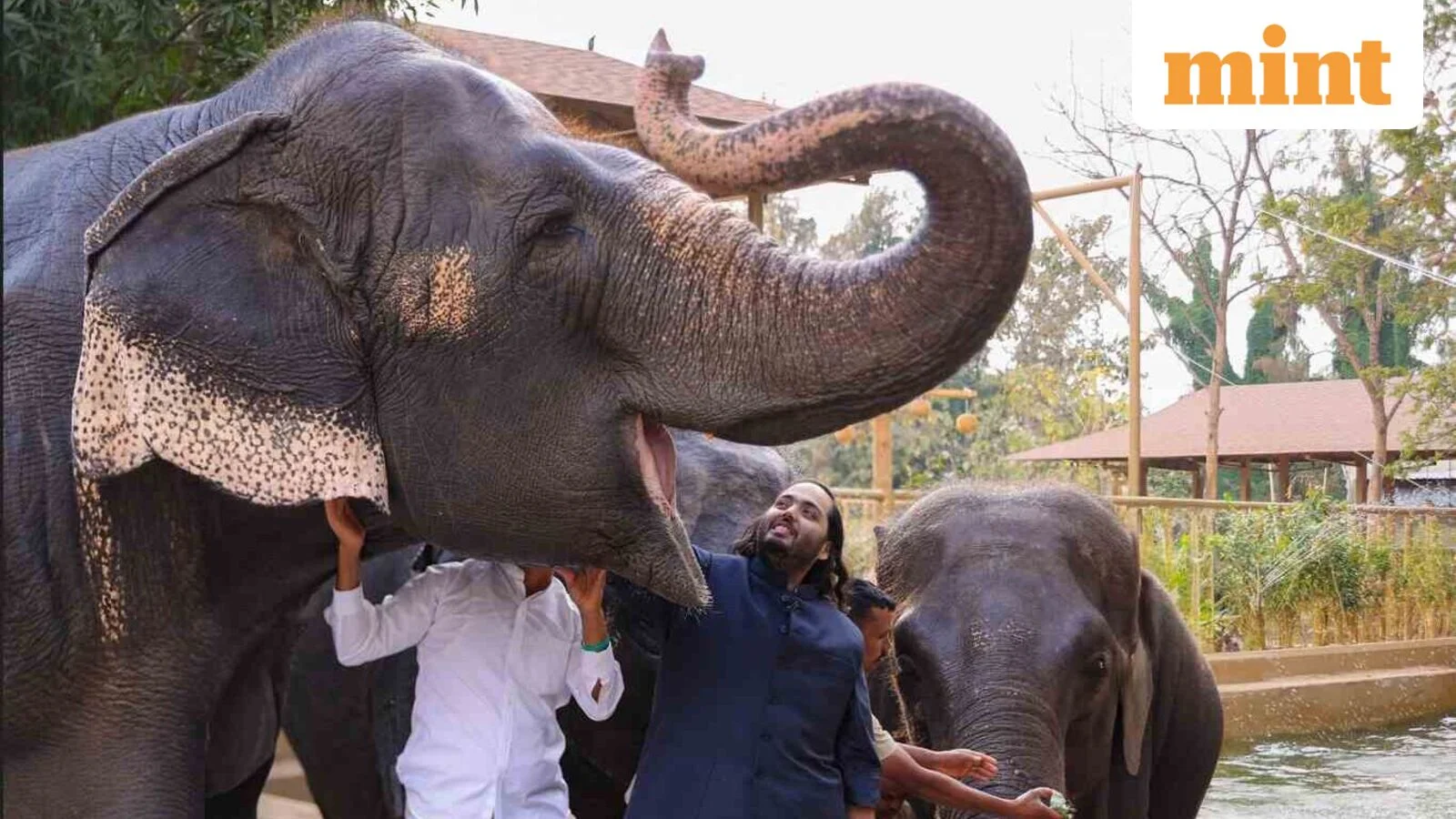
It’s a dramatic reversal from two years ago. When Mukesh Ambani and his wife Nita Ambani invited the likes of Mark Zuckerberg, Ivanka Trump and Bill Gates to the prenuptial bash of Anant Ambani, the youngest of the couple’s three children, the save-the-date card featured illustrations of elephants, tigers, and lions. The guests were taken to Jamnagar, the refinery complex that sits at the heart of Mukesh Ambani’s $86 billion fortune, and treated to a Rihanna concert. They were also given a glimpse of Anant Ambani’s brainchild: a 3,500-acre animal rescue and rehabilitation centre, known as Vantara—the “star of the forest.”
Since then, however, the shelter has gone from a showpiece of corporate altruism—Prime Minister Narendra Modi toured its veterinary hospital last year—to a publicity headache. When Himal, a news magazine, covered it two years ago, the rescue center was already playing host to threatened and exotic species such as Brazilian Spix’s macaws, African spurred tortoises, and orangutans. A March 2025 article in the German newspaper Süddeutsche Zeitung called Vantara the world’s largest zoo and alleged that many of the “rescued” animals might have been caught in the wild and brought to Jamnagar. The foundation running the facility denied the claims as baseless.
The menagerie, which boasted 2,000 species and 150,000 animals at the time of Modi’s visit, also stands in the way of a smooth leadership succession. The two older children—Akash Ambani and Isha Ambani—are yet to convince investors they actually can take over the reins of the group’s telecom and retail units, when Mukesh Ambani and his trusted consigliere Manoj Modi hang up their boots.
But as the putative head of the group’s oils-to-chemicals cash cow and its capital-guzzling foray in new energy, Anant Ambani is the most vulnerable. His ventures will have to bear bruising competition from the rival infrastructure empire of Gautam Adani, who has overtaken Mukesh Ambani as Asia’s richest tycoon. Although Vantara is at arms’ length from the business, Anant Ambani’s elevation in April 2025 as an executive director of Reliance Industries Ltd., the family’s flagship enterprise, has made the reputational risks too large to ignore.
In September 2025, the Supreme Court of India ruled that when it came to animal acquisitions, Vantara had complied with all wildlife, customs, and money-laundering laws. But the scrutiny of conservationists refuses to go away, as do legal challenges by non-government organisations for sourcing exotic species from around the world.
A fresh legal petition in March sought to halt imports of animals considered at risk of extinction by the Convention on International Trade in Endangered Species of Wild Fauna and Flora, or CITES. While the court refused to entertain the plea, the judges did flag the risk that even lawfully importing animals from their natural habitats could amount to cruelty.
That was the last straw. Last week, Vantara wrote a 38-page letter to the local CITES management office under India’s environment ministry, saying that it doesn’t want to become, “however unwittingly, a driver of illegal trade” in wildlife. All future animal acquisitions will pass through a three-stage screening process, and no great apes, big cats or any species facing extinction will be imported from their natural homes.
Instead, the 31-year-old billionaire heir will now focus on the care of animals in their own habitats. So while as late as April, Anant Ambani was requesting Colombian authorities to let him take to India the feral hippos descended from the ones bred by the drug lord Pablo Escobar, the new proposal is for him to build a sanctuary in Colombia and save them from culling.
This change in strategy will be welcome news to conservationists. It will also bring some relief to global investors who have partnered with Reliance. Meta Platforms Inc. and Alphabet Inc. are significant equity owners in Jio Platforms Ltd., the telecom unit headed for an IPO. Meanwhile, shareholders from KKR & Co. and Silver Lake Partners to Abu Dhabi Investment Authority are waiting for Isha Ambani’s retail business, India’s largest, to come up with its own IPO. BP Plc is the Indian group’s partner in oil and gas exploration.
They are watching the 69-year-old tycoon’s ability to deliver a clean and successful succession. For Ambani, the topmost priority must be unity. Unlike the acrimonious parting that he had with his brother Anil Ambani, his children ought to be able to work together—he’s made it clear that the group can’t be divided.
But that won’t be enough. Future Reliance leadership must also be taken seriously in global boardrooms. While wanting to put a lid on the negative publicity around Vantara is a tactical move in that direction, investors will also want to see something more strategic—a cadre of world-class professional managers running India’s largest company by market cap. That way, whether the next-generation owners take as deep an interest in business as their father or spend their time indulging their passions will be largely immaterial.
This column reflects the personal views of the author and does not necessarily reflect the opinion of the editorial board or Bloomberg LP and its owners.
Andy Mukherjee is a Bloomberg Opinion columnist covering industrial companies and financial services in Asia. Previously, he worked for Reuters, the Straits Times and Bloomberg News.


