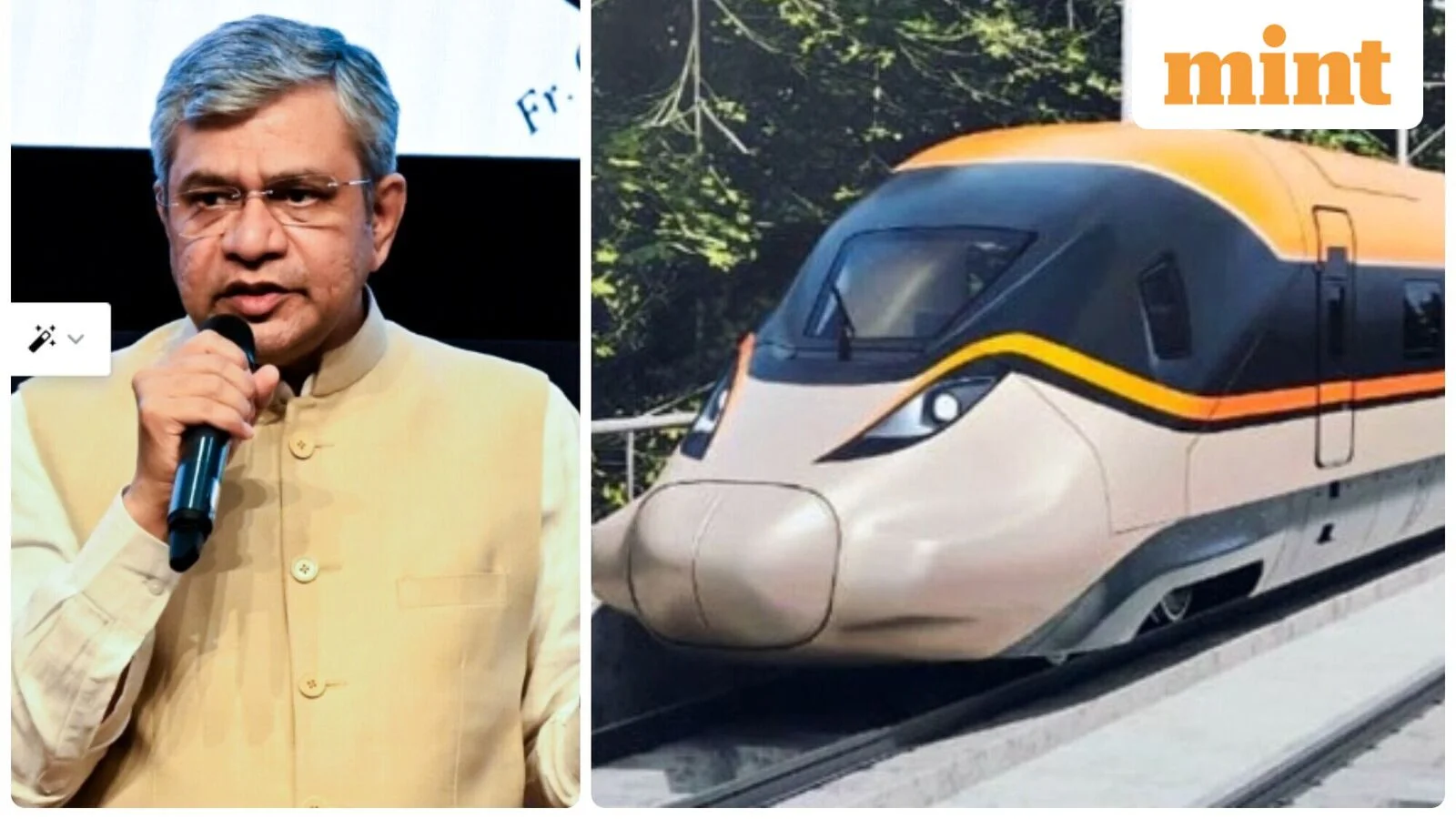
India’s bullet train turns indigenous: Features, cost, other details about made-in-India first high-speed rail project
India’s dream bullet train project is finally preparing for launch almost a decade after its foundation stone was laid by Prime Minister Narendra Modi. India’s first bullet train, which will run between Ahmedabad and Mumbai, is expected become operational from the later half of this year.
As authorities prepare to launch the first leg of this project between Surat and Bilimora, the full project is expected to be completed in 2030. With train sets arriving from Japan, the project’s ₹1.1 lakh crore funding has come from the Japan International Cooperation Agency (JICA). The Mumbai-Ahmedabad bullet train project is being developed by National High Speed Rail Corporation Limited (NHSRCL) with Japanese technology support.
Features, cost, design, material other details about made-in-India first high-speed rail project
Indian Railways plans to produce the bullet trains indigenously using stainless steel as the Integral Coach Factory (ICF), Chennai, awarded BEML Limited a ₹866.87 crore contract for the same. Responsible for the designing, manufacturing and commissioning of two eight-coach high-speed trainsets, BEML will develop two prototype of the high-speed bullet trains which will be capable of reaching 280 kmph speed.
According to TOI report, the designs for the high-speed bullet trains are currently being finalised which will feature world-class passenger amenities. Equipped with fully air-conditioned chair cars, the bullet trains will feature infotainment systems, reclining and rotatable seats and dedicated facilities for divyangjans.
As per TOI report, each of the indigenously produced high-speed train is expected to cost around ₹390 crore to ₹400 crore. The project witnessed time delays and cost overruns due to several factors, including delays in land acquisition, statutory clearances and finalisation of the trains.
The work on development of indigenously produced trains is in progress at ‘Aditya’ High-Speed Rail Complex in Bengaluru of BEML which was established solely for the production of the bullet trains. Bearing codename B-28, the high-speed trainsets will be manufactured using advanced precision-driven technologies.
Notably, Indian Railways is planning to launch seven additional high-speed rail routes, including Bengaluru-Chennai, Bengaluru-Hyderabad and Bengaluru-Pune-Mumbai.
How will made-in-India bullet trains be different from those in Japan and Europe
Since India primarily experiences a tropical monsoon climate, the bullet train sets will be designed and manufactured to suit the local conditions involving heat and dust. Meanwhile, bullet trains running in countries like Japan and across Europe are designed in accordance with operation in cold climates. Moreover, Railway minister Ashwini Vaishnaw declared that the next generation of bullet trains will be designed to run at speeds of 350 kmph.


