‘Impacts of warming trends’: Scientists analyse satellite imagery to trace what caused Nepal flash floods
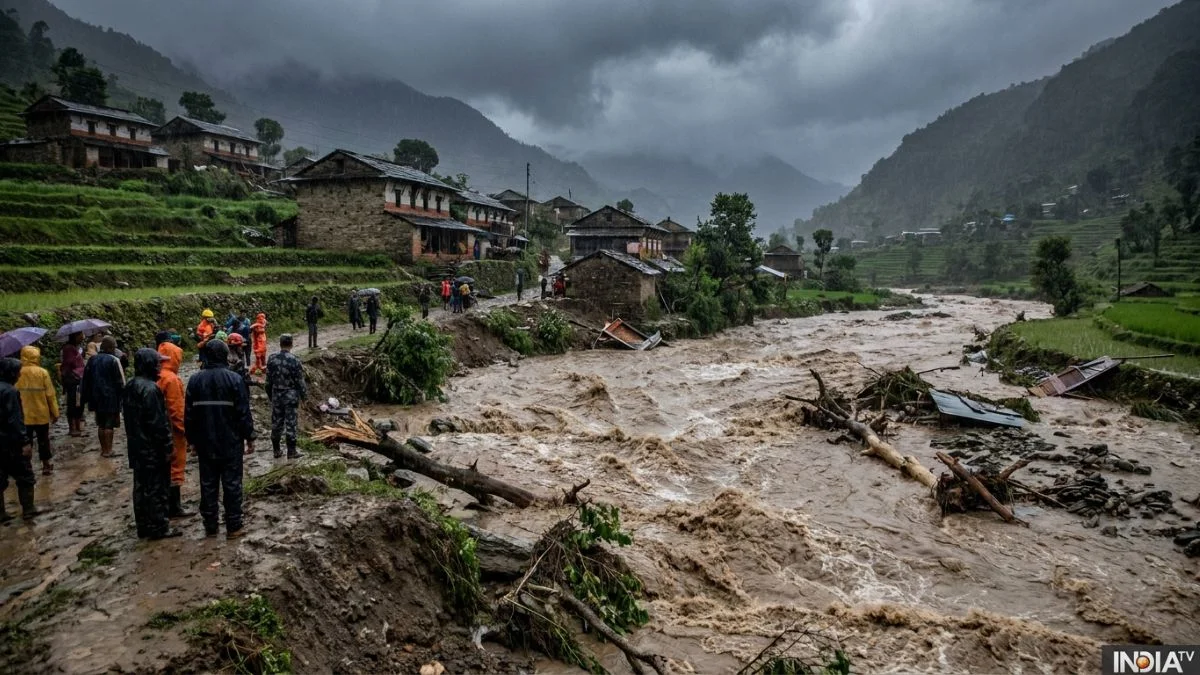
The apocalyptic flash floods in Nepal and Tibet have killed hundreds, while many more remain missing, as authorities fear that the death count may rise. Many aerial footages and photos have surfaced since then showing the devastation, as authorities scramble for a search and rescue operation.
While rescue team continue searching for the survivors, scientists have begun reviewing the satellite imagery for clues to find out what actually caused and assess the devastation.
Two of those scientists are geomorphologists Kristen Cook and Dan Shugar, who said the images they obtained on Wednesday were obscure and they could only see that part of a glacier had broken off from the Langtang Lirung peak, near the border with Tibet.
They received images on Thursday in which they could see that the bedrock underneath the glacier had collapsed, taking the massive chunk of ice down with it and sending boulders and ice into the valley.
“It shows the whole area without anything hidden, and we could see that, yes, it looked like there was not only this glacier that had failed, but a much larger chunk of the bedrock of the mountainside itself that had given way,” said Shugar, associate professor at the University of Calgary. “You have this big bedrock failure that took part of the glacier with it.”
‘Debris maintained momentum through the steep’
According to Cook, who works at the Université Grenoble Alpes in France, the debris maintained its momentum through the steep after slamming the valley’s floor.
Before and after satellite images of the Kolpurtar, Betrawati and Syapru Besi areas of Nepal show that the river is now much wider, and brown and black, because it overtopped its banks in some areas and filled with debris in others. The change in the colour of the water shows how much sediment the flow was carrying, turning from greenish to very brown because it’s full of mud, Cook said.
“While we cannot at this point directly link this collapse to climate change, it is not unexpected to see more events of this type with a warming climate,” Cook said. “Not this big, hopefully not this big.”
Flooding ‘left a wasteland’
Alton Byers, a mountain geographer at the University of Colorado at Boulder, said that the flash floods “left a wasteland in its wake”, pointing out that it could take several years to recover. He said he also believes that the Wednesday’s incident was caused due to global warming.
“All the indicators, to me, point to the impacts of warming trends,” he said. “In this case, the permafrost that for millennia has helped to hold together high-altitude rock and ice and soil and glaciers is now weakening and becoming unstable.”
(With AP inputs)
ALSO READ:
Earthquake or dam collapse? Blame game between Nepal and China over what caused flash floods that killed hundreds


