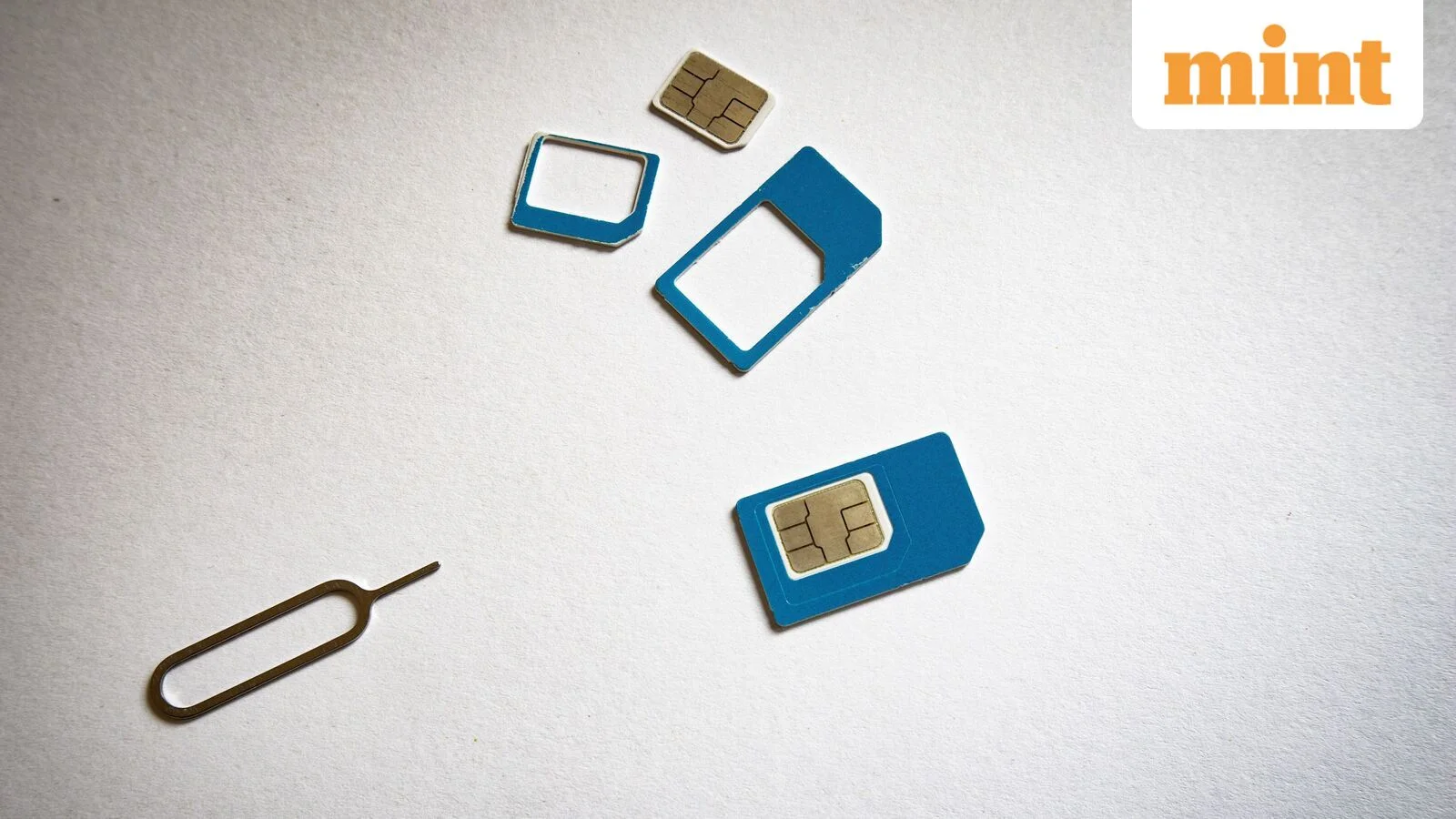
Too many SIM cards? Here’s why you might be denied a new mobile connection soon
Starting 24 August 2026, the Department of Telecommunications (DoT) has issued a strict circular mandating that all telecom operating companies halt the issuance of new mobile connections to individuals who have already reached their legally permitted maximum number of SIM cards.
According to a Times of India (TOI) report, this directive shifts the operational burden onto telecom service providers (TSPs), requiring them to deploy robust technical and organisational measures to identify customers who breach limits and explicitly inform them that no further connections can be authorised under their name.
Established limits on mobile connections
The overarching policy dictates strict caps on the number of SIM cards a single individual can possess across all telecom operators and licensed service areas nationwide.
These limits are regionally calibrated:
- Standard national limit: In most of India, an individual is legally permitted to hold up to 9 active mobile connections.
- Restricted regional limits: Due to specific administrative and security protocols, the cap is reduced to 6 mobile connections for subscribers residing in:
– Jammu and Kashmir
– Assam
– The North-East regions
The onus of transparency falls upon the consumer at the point of purchase, TOI reported.
Subscribers will now be strictly required to declare the total number of active mobile connections held in their name—across all service providers and geographical zones—in their Customer Application Form (CAF) when applying for a new SIM.
Verification mechanism
To enforce these caps, the DoT is reportedly rolling out a centralised, photograph-based verification ecosystem. The mechanics of this new identification system will operate as follows:
- Centralised image database: Beginning 23 August 2026, the DoT will upload representative photographs of subscribers who have already reached their allowable SIM limit to the Digital Intelligence Platform (DIP).
- Daily TSP Synchronisation: Telecom operators are mandated to access the DIP and download subscriber images daily.
- Visual Identification: TSPs must subsequently utilise these downloaded photographic records as a reference database to intercept and identify these specific customers if they attempt to procure additional SIM cards beyond the prescribed threshold.
Phased Implementation Strategy
The enforcement of these stringent SIM card regulations will be carried out in two phases to allow telecom operators time to upgrade their infrastructure capabilities, TOI reported.
Phase One: Post-Facto Verification
In the immediate term, the identification system will operate on a “post-facto” basis, commencing 24 August 2026.
This means that the verification and matching process may occur shortly after a new connection is enrolled in the system.
If the daily audit reveals that a newly activated connection exceeds the customer’s permitted limit, the telecom operator is obligated to immediately suspend that specific connection until the discrepancy is formally resolved.
Phase Two: Real-Time Interception
The government has directed all telecom companies to ultimately transition their backend architecture to support real-time verification checks.
By November 30, the system must be capable of identifying excess connection attempts instantaneously during the initial enrollment and activation process, thereby preventing the issuance of the extra SIM card altogether rather than suspending it post-activation.


