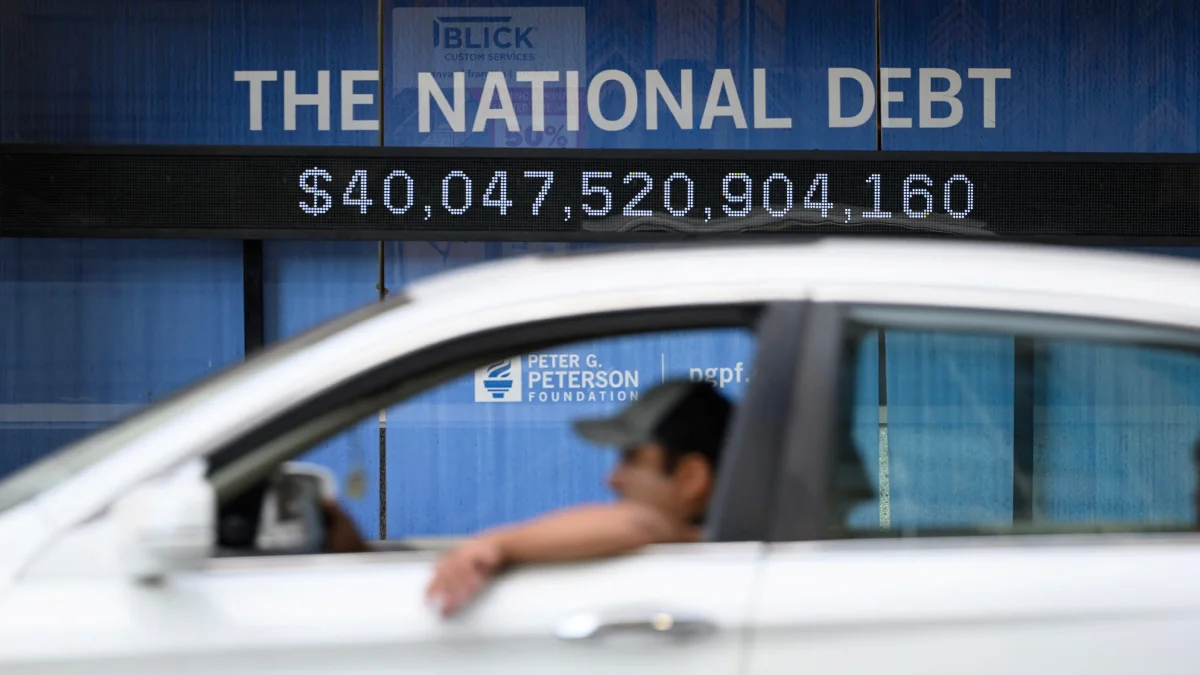
Prolonged Iran war costing dearly? US debt tops whopping USD 40 trillion, fourth record high under Trump
The US national debt has surpassed a record USD 40 trillion, marking an unprecedented milestone driven by rising defence spending, major social programmes such as Social Security and Medicare, and mounting interest payments on the federal deficit. The milestone marks the fourth time the debt has increased during Donald Trump’s second tenure as President.
The debt reached USD 40 trillion just five months after crossing the USD 39 trillion mark in March and five months after surpassing USD 38 trillion in October. The rapid increase underscores the growing pressure on the US government to balance competing priorities, including higher defence spending and efforts to reduce the cost of essentials such as fuel and groceries.
White House spokesman Kush Desai said the Trump administration was focused on cutting waste, fraud and abuse in federal spending while promoting economic growth and improving the country’s debt-to-GDP ratio.
Fourth record high under Trump
Since Donald Trump returned to the White House in January 2025, the US national debt has surged by nearly USD 4 trillion, hitting a record high four times. It rose from around USD 36.2 trillion at the start of his second term to more than USD 40 trillion in August 2026.
During this period, the debt crossed the USD 37 trillion mark in August 2025, reached USD 38 trillion in October, surpassed USD 39 trillion in March 2026 and then breached USD 40 trillion in August 2026.
The pace of borrowing has been particularly notable, with the debt rising by USD 1 trillion in just 71 days between August and October 2025, before adding another USD 2 trillion over the following 10 months.
High costs for Americans
Economists and fiscal experts, however, warn that the mounting debt is already affecting Americans through higher borrowing costs for mortgages and cars. They also say reduced business investment could weigh on wages, while higher debt-related costs may contribute to more expensive goods and services.
Margaret Spellings, president and CEO of the Bipartisan Policy Center, said the federal debt was already increasing the cost of living and limiting spending and investment, posing a threat to long-term economic prosperity. She warned that the current fiscal path was unsustainable and that a recession, global conflict or other major shocks could rapidly turn the challenge into a full-blown crisis.
The US operates under a statutory debt limit, which Congress can raise, suspend or abolish. The Bipartisan Policy Center estimates that the country could reach the current USD 41.1 trillion debt ceiling between late winter and mid-summer 2027, potentially forcing Congress to once again act on the borrowing limit.
Recent data from the Organisation for Economic Co-operation and Development also shows that the US has one of the weakest fiscal positions among developed economies.
With inputs from AP
Also Read:
Trump threatens countries against financially assisting Iran


