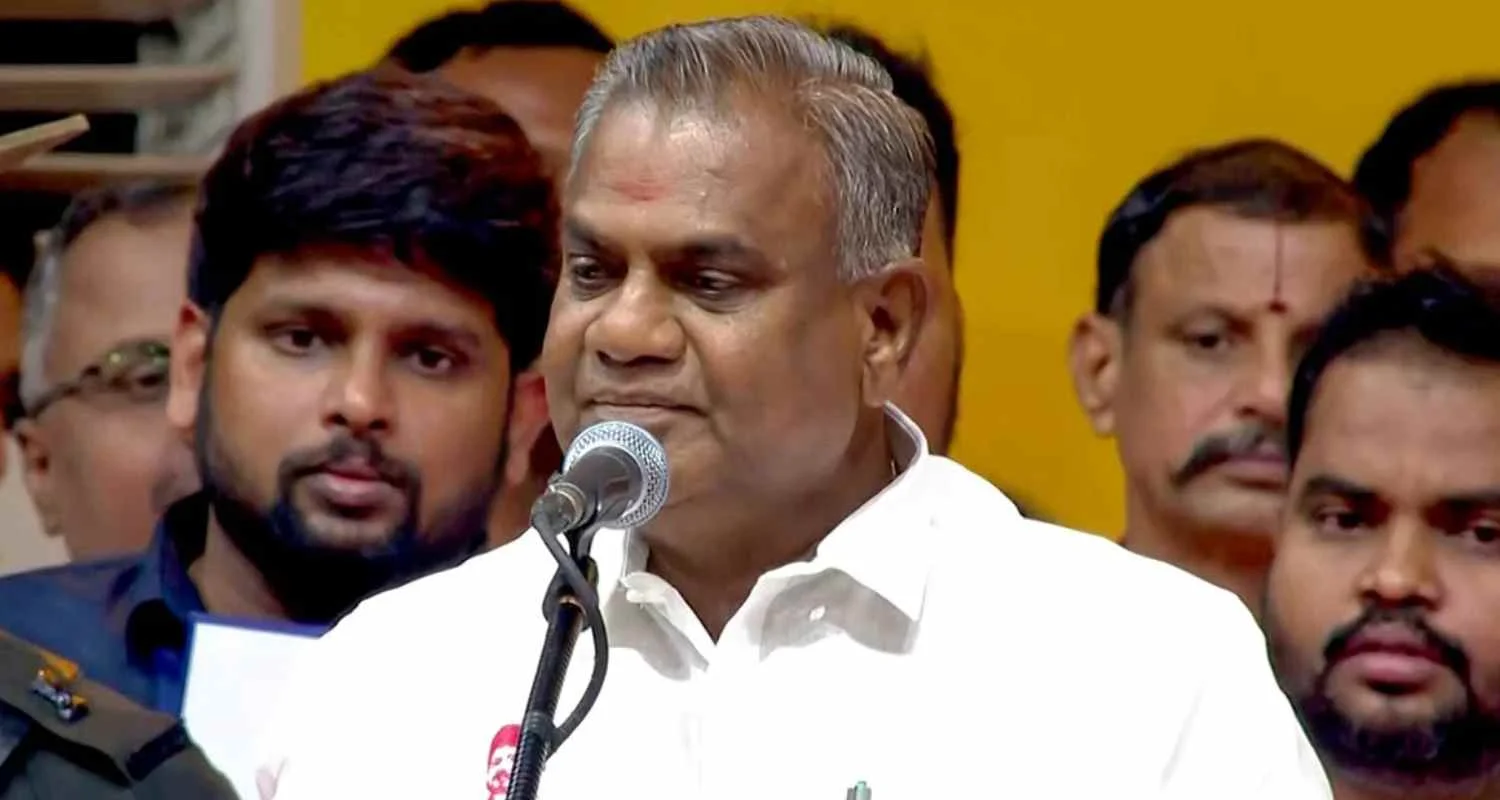
Amid mounting political tensions over the Cauvery water dispute, the Tamil Nadu Water Resources Minister N Anand on Wednesday reiterated the government’s opposition to the proposed Mekedatu dam project, stating that Karnataka would not be permitted to lay even a single stone for the structure.
Speaking in the State Assembly, Anand responded to DMK MLA Durai Chandrasekaran, who had accused the ruling TVK government of adopting a “soft approach” on the Cauvery issue.
“We will not allow the Karnataka government to lay even a single stone to build the Mekedatu dam,” Anand said in the Assembly.
He said Chief Minister Vijay’s government was actively pursuing the matter on multiple fronts, both through talks and legal measures. The Cauvery water dispute is a long-running interstate river-water-sharing conflict, with Karnataka and Tamil Nadu as the principal parties. The dispute revolves around how the waters of the Cauvery River should be shared, particularly during years of low rainfall.
The issue resurfaced amid developments concerning the Mekedatu balancing reservoir project, proposed by Karnataka. It has been a major point of friction between the two states, with Tamil Nadu traditionally opposing it because it would affect downstream water flow.
The ruling and the opposition camps also locked horns over the Mekedatu Dam row in the Assembly on August 7. Udhayanidhi Stalin said that, like Karnataka, all parties in Tamil Nadu should also demonstrate that they were united on the issue.
CM Vijay, meanwhile, replied that there was no need for an all-party meeting on the Mekedatu Dam and the Cauvery water dispute, and urged the opposition not to “play politics.” He slammed the Opposition parties and assured that the TVK-led government will “not compromise on the rights regarding the Cauvery water issue.”
On June 19, the Tamil Nadu Legislative Assembly passed a resolution opposing the Karnataka government’s proposal to construct the Mekedatu dam across the Cauvery River. The resolution was later amended to specifically urge the constitution of a tribunal to address the issue.