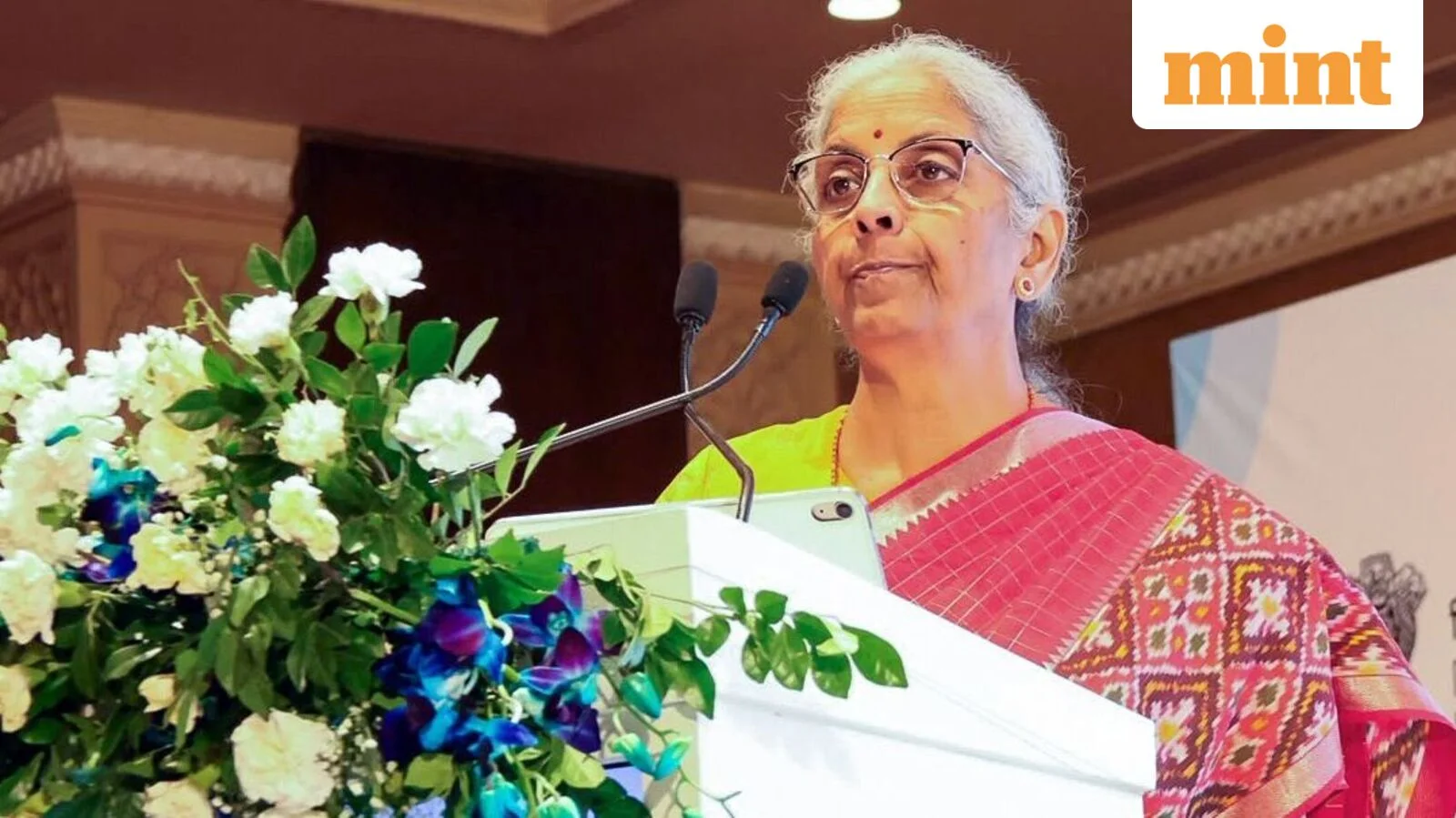
FM Sitharaman asks public sector banks to shake off ‘government bank’ image, target youth
New Delhi: Public sector banks must shed the perception of being ‘government banks’ and build long-term relationships with young customers, Union finance minister Nirmala Sitharaman said on Tuesday, while proposing a month-long ‘Banking for Youth’ campaign starting 2 October and urging banks to engage customers from “campus to career and beyond”.
“Public sector banks still give the impression of a government bank,” Sitharaman said while speaking at the PSB Confluence 2026. She said India has one of the world’s youngest populations and that young people will increasingly shape the country’s patterns of consumption, savings, investments, entrepreneurship and wealth creation.
Sitharaman said financial capability should develop alongside adulthood, rather than become a reactive adjustment when a person begins their first professional engagement. Engaging young people early, she said, is both a responsibility and an opportunity for banks.
To put this into action, she urged state-owned lenders to launch the month-long ‘Banking for Youth’ drive on Gandhi Jayanti. The initiative, targeted at citizens aged 16 and above, could be jointly managed by the department of financial services (DFS) and the Indian Banks’ Association (IBA), she said. The campaign should actively reach young people at the start of their financial journey, bring them into the formal banking system and establish an early, meaningful connection, Sitharaman added.
Youth outreach
Banks should actively engage with young people rather than wait for them to visit branches, she said. Colleges, universities, skill-building institutions and other campuses could become important touchpoints through account-opening initiatives, financial awareness programmes, and direct interaction with bank officials.
She called for equal emphasis on awareness of the formal credit ecosystem, including credit scores, bank credit products, and government credit schemes. This, she said, would help young people access finance for their future entrepreneurial journeys. At the same time, banks should sensitise young customers about maintaining good credit scores and credit histories as part of responsible credit discipline, she added.
Banks could also offer free online learning content in collaboration with reputed educational platforms and institutions, using learning and skill development as an avenue to engage youth and bring them into the formal banking system, Sitharaman said.
Sitharaman said young Indians have grown up with smartphones and expect banking to be simple, intuitive, personalised and available around the clock. PSBs must therefore keep pace with these expectations, she said.
As an important part of the campaign, IBA could explore launching a web- and mobile-friendly portal dedicated to banking awareness for youth. In coordination with stakeholders, PSBs and DFS, IBA could develop the portal as a single point where young people can understand banking services and financial opportunities suited to their needs and connect with appropriate banking services.
The portal could also gamify the awareness campaign through interactive features such as quizzes, graphics and certificates. Nudges towards positive financial behaviour, such as points and tokens with some restricted end use, could also be considered, she said.
While the campaign may have a common framework, each of the 12 PSBs should develop its own strategy to attract and engage youth based on its product offerings, regional presence and institutional strengths, Sitharaman said. Banks should also plan for seamless progression across life stages, including education, jobs and marriage, and aim to become the preferred financial partner, she added.
Priority-sector lending
Turning to priority-sector lending, Sitharaman said public sector banks have historically played an important role in ensuring the flow of institutional credit to priority sectors and advancing financial inclusion. Credit to farmers, small businesses, MUDRA beneficiaries, economically weaker sections of society and disadvantaged communities remains a top priority of the government, she said. The objective should be to expand credit while improving the quality of priority-sector lending, Sitharaman said, and its success should be assessed not merely through numerical targets but by whether credit is timely, adequate and productive.
Referring to Prime Minister Narendra Modi’s address on 15 August, she said banks must translate his vision for agriculture under the second stream of ‘Sapt Dhara’ into appropriately designed and targeted agricultural financing. In particular, banks should substantially expand credit to farmers growing pulses and oilseeds, which would reduce India’s dependence on imports, improve soil health and bring Atmanirbharta, she said.
This effort should be closely aligned with the Prime Minister Dhan-Dhaanya Krishi Yojana, particularly in districts covered under the scheme. Banks should improve the availability of short- and long-term credit in these districts to enhance productivity, promote crop diversification and sustainable agriculture, expand irrigation, and strengthen post-harvest storage and allied infrastructure.
Agricultural lending should increasingly build climate resilience, the finance minister noted. Banks should encourage high-yielding and climate-resilient varieties, chemical-free and other good agricultural practices, water conservation and micro-irrigation, including drip and sprinkler systems.
Sitharaman said financing strategies must be specific to local agricultural conditions, as dryland and rain-fed farmers have different requirements and face risks from those in irrigated regions. The focus should remain firmly on small and marginal farmers, with the DFS monitoring priority-sector and agricultural credit.
The outcome of the two-day confluence, she said, should ultimately be reflected in what banks change and achieve. Progress should be assessed through outcomes such as how many young people have been brought into meaningful banking relationships, how the quality of priority-sector lending has improved, and where banks have strengthened their competitive position.


