
RBI’s push to curb mis-selling by banks may put life insurers in the cross hairs
While the draft guidelines dwell on various dubious selling practices, they don’t detail the specific checks and balances banks would need to maintain, or the penalties they would incur if for failing to do so. For now, it’s business as usual. However, if the RBI specifies these details, the life insurance industry could end up in hot water.
Banking on banks
As a sales channel, banks are integral to the life insurance sector and their importance has progressively increased. There was a time when the life insurance sector revolved entirely around individual agents. This was when the government-owned Life Insurance Corporation (LIC) was the only life insurer. That started changing when the industry was opened to private players in 2000. Many of the earliest private entrants also operated banks. Also, as more bank branches came up, the banking channel grew in importance for the life insurance sector.
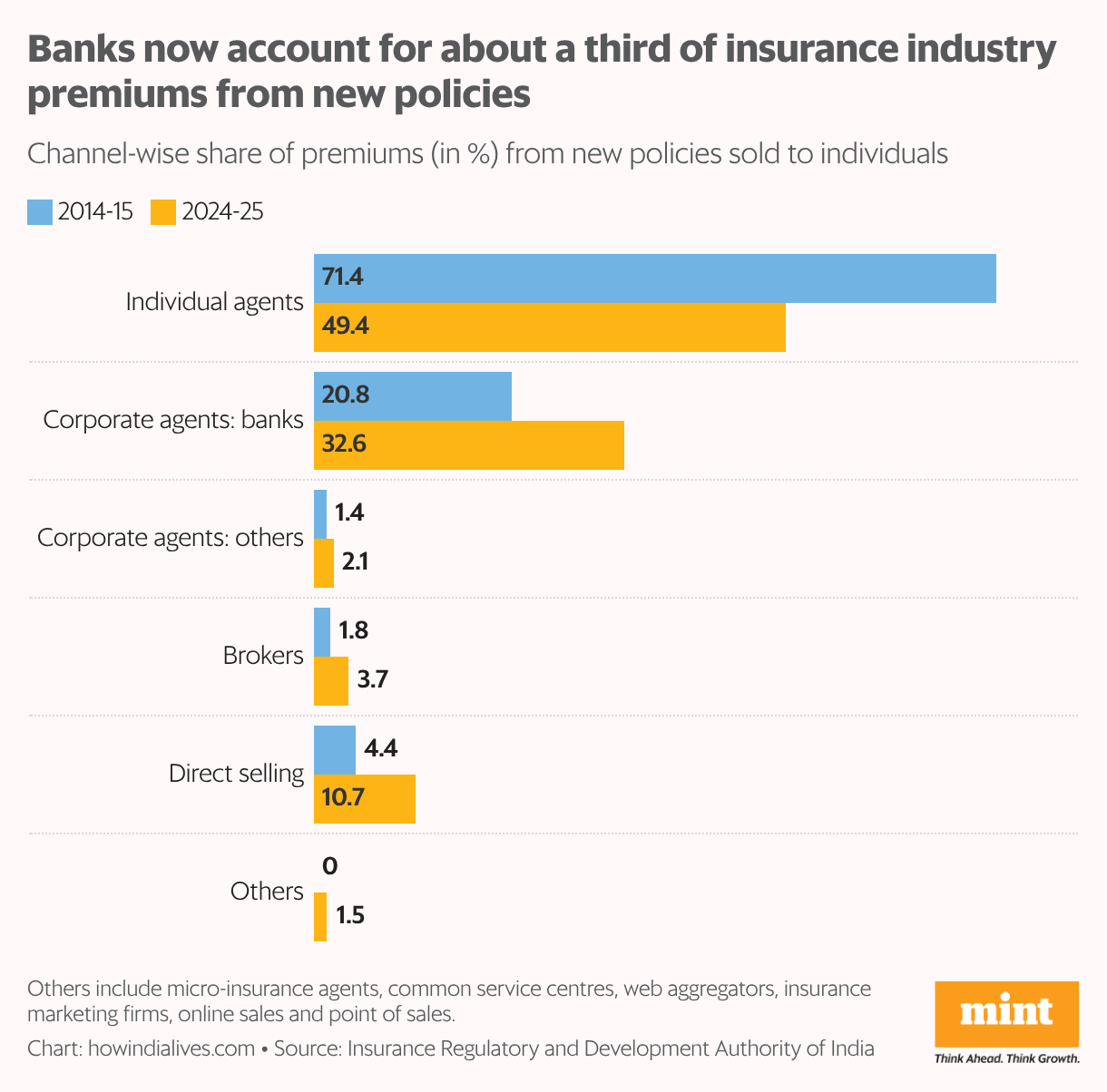
A measure of this is where life insurers get their new business from. Banks are the second-largest mobilizer, with their share of new premiums increasing from 20.8% in 2014-15 to 32.6% in 2024-25. The other channel that has gained share is direct sales. These gains have come at the expense of the individual agent, whose share is now below 50%.
Stocks show resilience
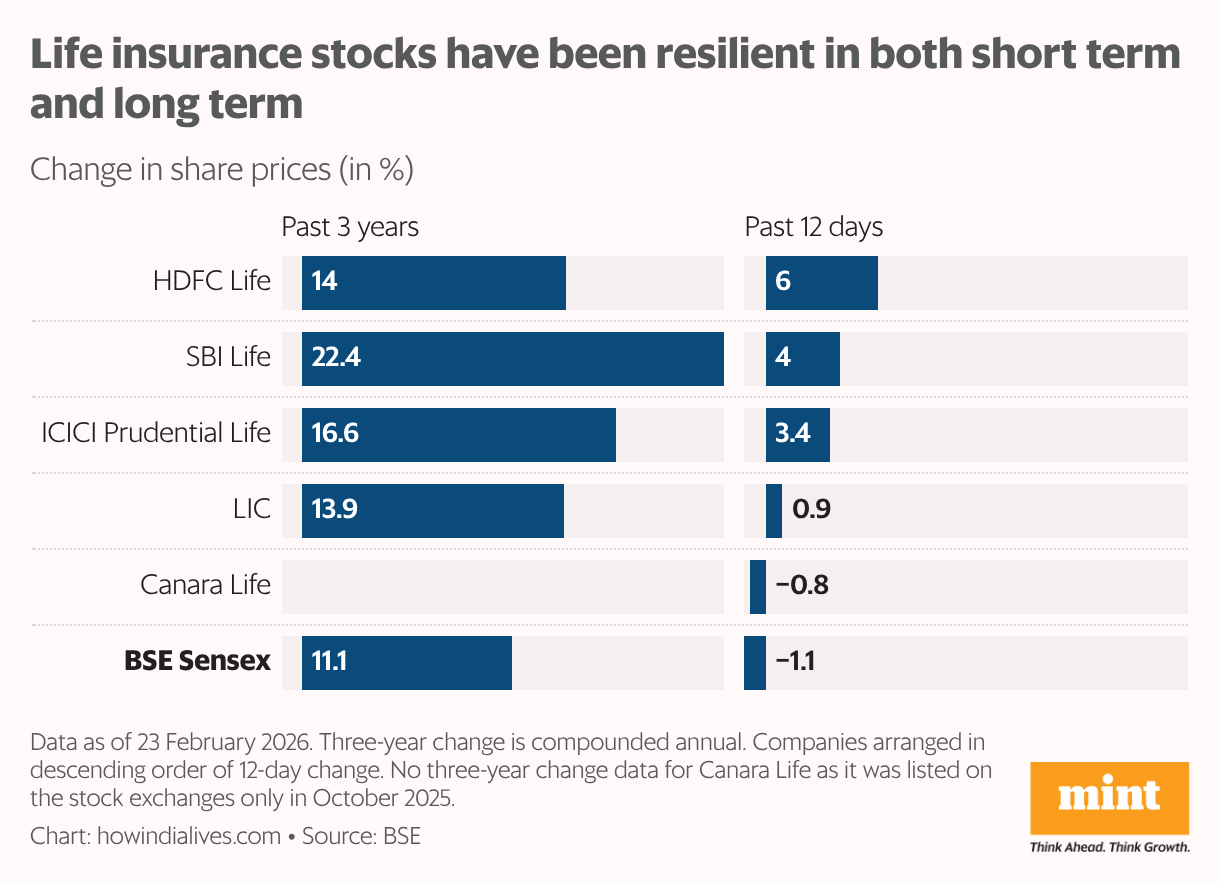
Banks bring in nearly one-third of new business for life insurers. The new draft guidelines directly target the bancassurance channel, curbing the bundling of products to prevent mis-selling, and requiring explicit consent, among other things, Yet, life insurance stocks have displayed resilience. In the 10 days since 11 February, when the RBI released the draft guidelines, the stocks of all five listed life insurers fared better than the benchmark BSE Sensex.
One reason for this could be the absence of specifics in the guidelines, which are still at the draft stage and scheduled to be notified only in July. Even over a longer period of three years, all life insurance stocks have outperformed the Sensex by a wide margin. The removal of the 18% goods and services tax on all premium payments on life insurance plans made by individuals since 22 September 2025 has been a major tailwind for these firms.
Previous regulatory shocks
Since its deregulation in 2000-01, the life insurance sector has seen brisk expansion, initially driven by aggressive private participation and the popularization of unit-linked insurance plans (ULIPs). In 2000-01, total premiums collected by the industry amounted to about ₹35,000 crore. In 2024-25, this figure had increased to about ₹8.86 trillion at a healthy compound annual growth rate of about 14.4%.
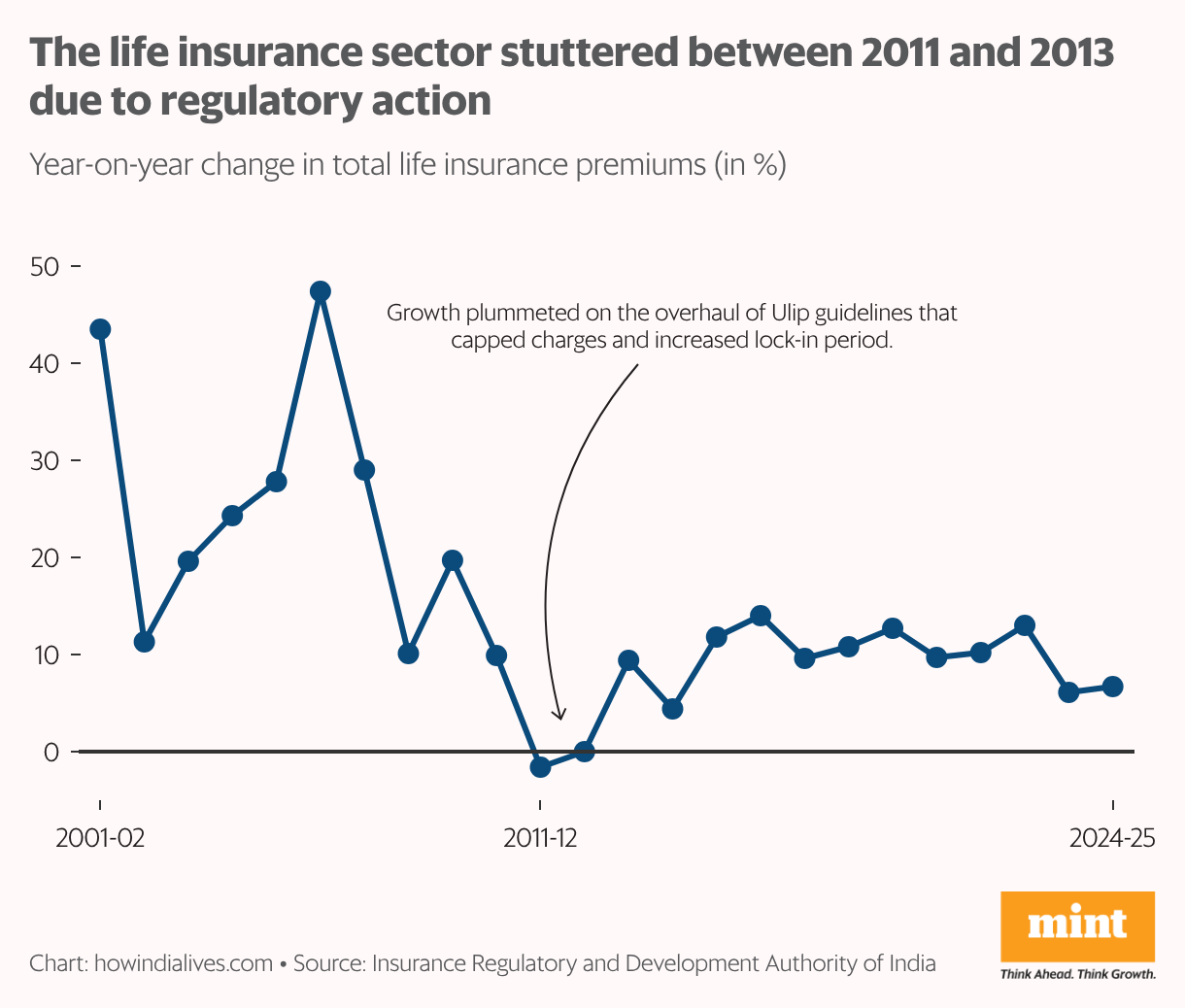
But it hasn’t always been a smooth ride. The sector previously faced a significant setback due to regulatory intervention during the 2010-13 period of stagnation. Year-on-year premium growth crashed to -1.6% in 2011-12 and barely improved to 0.04% the following year.
This downturn was triggered by the Insurance Regulatory and Development Authority’s structural overhaul of ULIP guidelines in late 2010. By capping various charges, increasing the insurance cover and extending the lock-in period, the regulator effectively slashed the high commissions that had previously incentivized the aggressive sale of these products.
Sustainability pivot
Growing investor backlash, criticism in the media and regulatory action compelled life insurance companies to step back and reset. They moved away from market-linked volatility toward traditional life insurance products. While this transition initially dampened growth, it laid the foundation for a more sustainable, protection-focused model. The industry rebounded after 2013 as companies diversified their distribution channels and focused on long-term value.
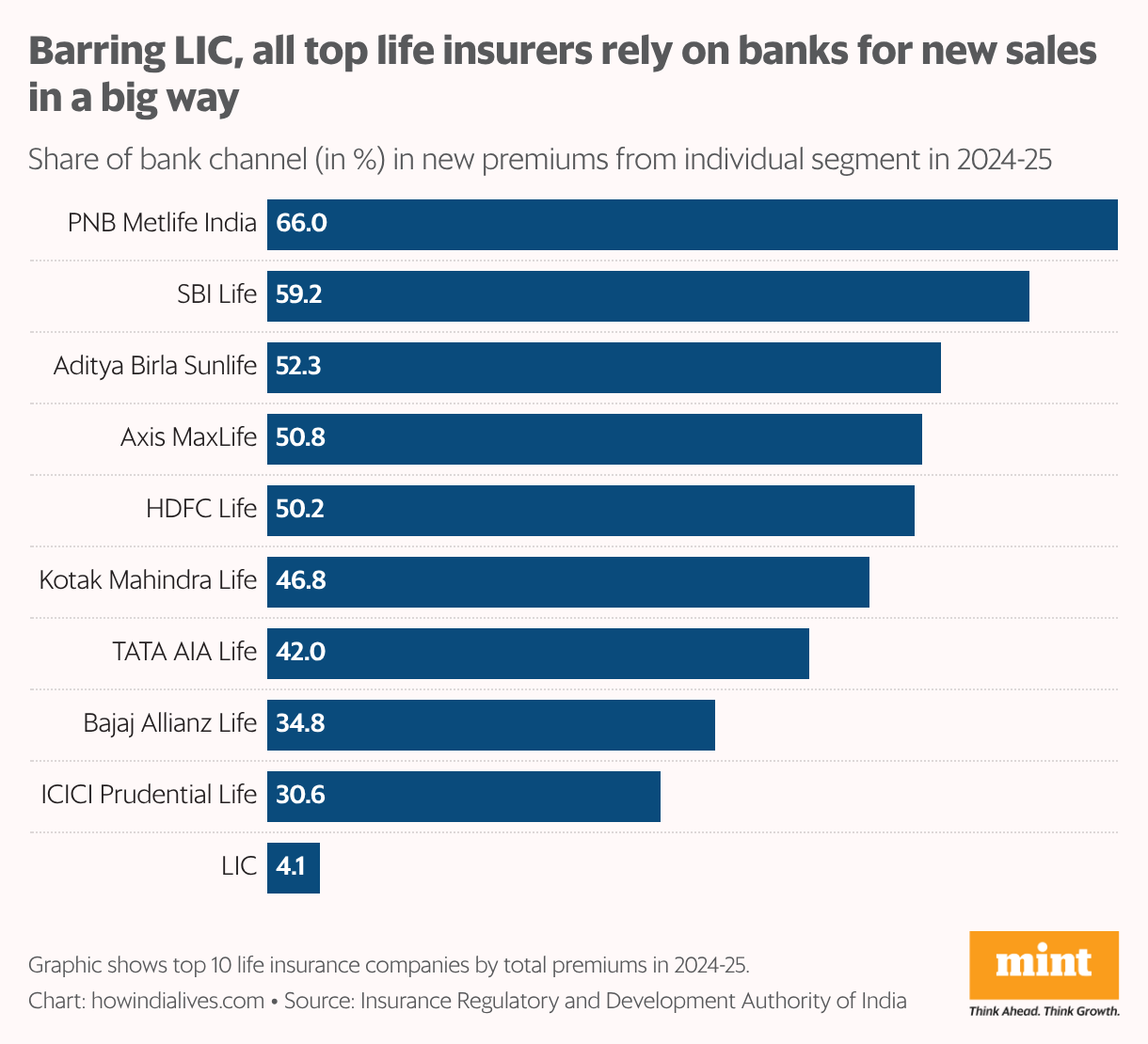
The past two financial years, however, saw growth in premiums dip to levels not seen since 2014-15. Meanwhile, the share of banks in new life insurance premiums is at an all-time high. All the top 10 life insurers by total premiums, barring LIC, got a significant part of their new premiums from the banking channel. Six of them belonged to a group that also owned a bank. For five of these 10 insurers, banks brought in more than 50% of new premiums in 2024-25, led by PNB Metlife and SBI Life.
Corporate vs individual agents
Selling insurance policies is a natural extension to the banking business. In 2024-25, Axis Bank earned ₹2,746 crore from selling life insurance policies, clocking year-on-year growth of 39%. This amounted to about 1.8% of its total income and about 9.8% of its net profit on a consolidated basis.
But the manner in which these sales are happening is drawing scrutiny. On 23 February, finance minister Nirmala Sitharaman strongly criticized banks for mis-selling financial products and asked them to focus on their core products.
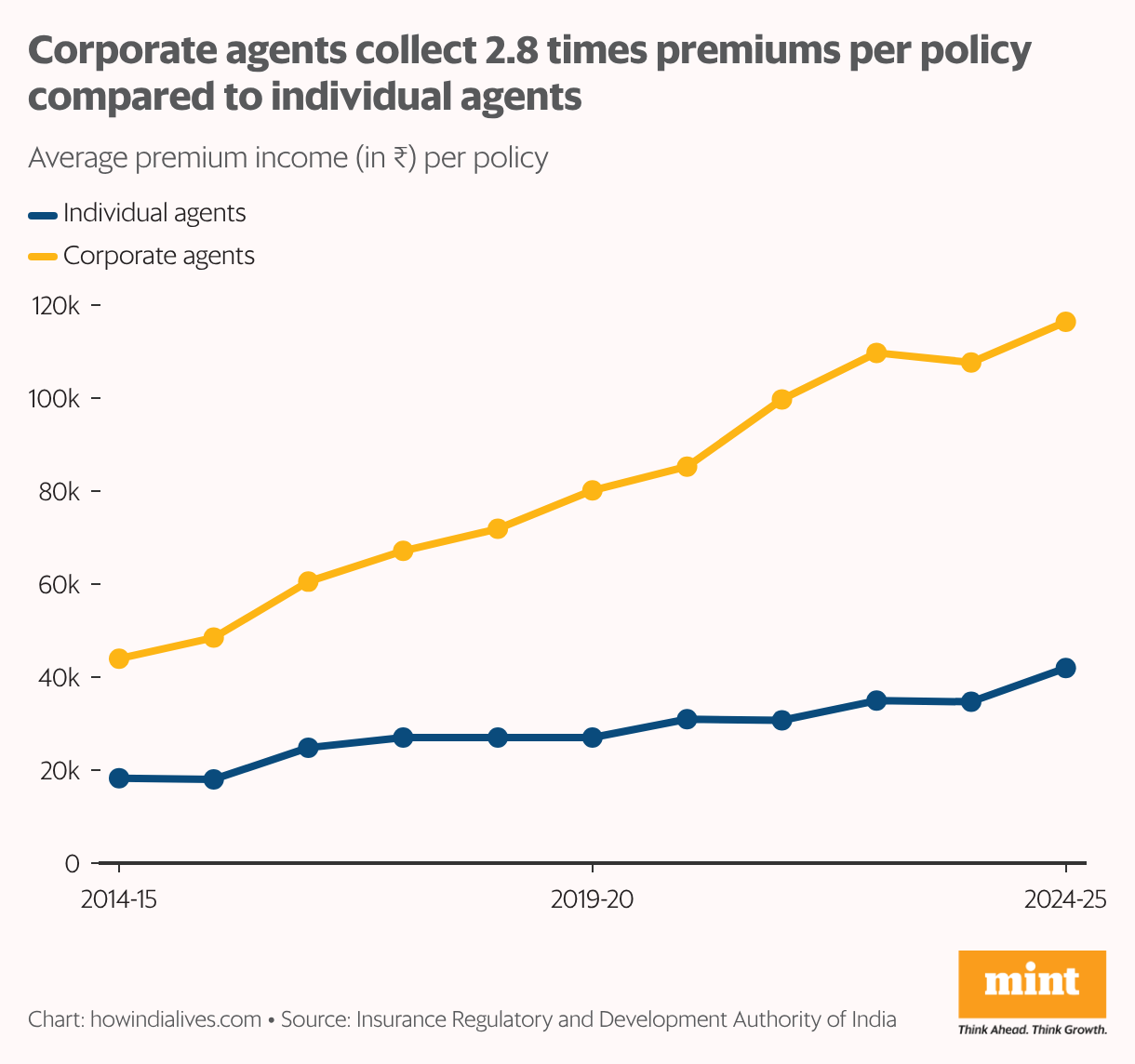
In recent years, the numbers of both individual agents and corporate agents (essentially banks) have increased. As of March 2025, there were 3.12 million individual agents and 1,566 corporate agents. In 2024-25, on average, an individual agent sold 6 policies and a corporate agent 3,167 policies. The average premium per policy of corporate agents was about 2.8 times that of individual agents. That’s why a tightening of related regulations on banks could dampen the growth of life insurers.
www.howindialives.com is a database and search engine for public data


Post Comment